Monday, May 16, 2011

Tuesday, April 12, 2011
King or Queen?

so, Japan was once ruled by a king. However, after around 75 years having a male rule, had led to many problems. such as wars, and disturbances. So, they had a solution to this problem, they would have a Queen instead. The Queen's name was Pimiko. It is thought that she might have bewitched her people they lived in a great palace with around 1000 woman, and only one man as a servant. After Pimiko's death, the Japanese voted in a man once again. Sadly, it was a replay of the times before, where it all led to violence and war. Soon, they chose a female ruler once again. She was a descendant of Pimiko.
Growth and Culture
As any other country,province, or even town...Japan had to start somewhere. They grew together as an Empire while the ice age (11000 years ago) was happening. They grew close to the Aian mainland and connected by a land bridge. They have found pottery in Japan, that they can date back to 9500. It just shows how old it really is.
Soon, people started to come to Japan. There was a culture that started, called the Jomon. The Jomon were people who were blended together from South China, the first settlers, and people from the Polynesian Islands. this culture lasted awhile, but ended around 300 B.C. These people lived off of hunting and fishing. They were people who enjoyed that, as well as gathers. Their name comes from a type of pottery that was decorated by pressing rope into wet clay, and later came to also have human figures with huge eyes, which some have seen as meaning "windows to the soul".
Around the same period, there was another type of people came to the island of Hokkaido. These people were called the Ainu. They were Caucasoid. This meant that they were tall, with fair skin and facial hair. Because of their physical features, they stuck out from the other people. Today though, Ainu are very rare, they have almost reached distinction. How they came to be is a mystery, but they still have a special place in Japanese history.
Yayoi. They also arrived at approximately the same time period. When they came to Japan, they came with a knowledge of fice culitivation, bronze, iron, glass, and mirrors. It is thought that the Yayoi culture originated from Korea and China.
Soon, people started to come to Japan. There was a culture that started, called the Jomon. The Jomon were people who were blended together from South China, the first settlers, and people from the Polynesian Islands. this culture lasted awhile, but ended around 300 B.C. These people lived off of hunting and fishing. They were people who enjoyed that, as well as gathers. Their name comes from a type of pottery that was decorated by pressing rope into wet clay, and later came to also have human figures with huge eyes, which some have seen as meaning "windows to the soul".
Around the same period, there was another type of people came to the island of Hokkaido. These people were called the Ainu. They were Caucasoid. This meant that they were tall, with fair skin and facial hair. Because of their physical features, they stuck out from the other people. Today though, Ainu are very rare, they have almost reached distinction. How they came to be is a mystery, but they still have a special place in Japanese history.
Yayoi. They also arrived at approximately the same time period. When they came to Japan, they came with a knowledge of fice culitivation, bronze, iron, glass, and mirrors. It is thought that the Yayoi culture originated from Korea and China.
Monday, April 11, 2011
The "afterlife"
k, so previously I had talked about their creation story, but there was more to it! So Izanami went to the land of hades. That's where I left off last time. But see, Izanagi didn't want to leave his wife yet. he didn't think that their creation of the island was yet complete, and he wanted her back so that they could continue to complete them. So he went to find her. Soon he found her amongst the shadows, but he could not see her face.
She told him that she couldn't come back, that she had already ate the food of the dead, so now she was one of them. However, she also told him that she would see what she could do, under one condition, that he would leave her be until she came back to him. He did, for a period of time. However, soon he wanted to see her again, so he went after her. furious, she told him that she hadn`t wanted him back here. Izanagi lit a torch and saw that Izanami`s body was rotting and had maggots climbing all over. Full of fear, he fled for the exit of the "underworld" and Izanami sent spirits after him. he made it to the exit, where he rolled a large boulder in front of it, seperating death and life forever.
She told him that she couldn't come back, that she had already ate the food of the dead, so now she was one of them. However, she also told him that she would see what she could do, under one condition, that he would leave her be until she came back to him. He did, for a period of time. However, soon he wanted to see her again, so he went after her. furious, she told him that she hadn`t wanted him back here. Izanagi lit a torch and saw that Izanami`s body was rotting and had maggots climbing all over. Full of fear, he fled for the exit of the "underworld" and Izanami sent spirits after him. he made it to the exit, where he rolled a large boulder in front of it, seperating death and life forever.
Sunday, April 10, 2011
Emperor
The Emperor plays a very important part in Japan. He is the head of it all for them, the head of the state. The Emperor is at the top of the Japanese Imperial Family.The Japanese have had an emperor of the same family ruling since they became Japan. The line of emperor's originated at the goddess of the sun, her first descendant was Jimmu. He was emperor in 660B.C. The throne in which they occupy is named the "Chrysanthemum Throne".


Thursday, April 7, 2011
CRUNCH
So today I realized that I have to start working on this blog again, in around a week, I have to show that I have another 6 hours completed. SO...this is where I ask for your help! I have 2 comments on this blog, and I would LOVE to see more!
Friday, January 28, 2011
Origami
So, I know origami wasn't really in Ancient Japan, but it is a huge part of japan today. So, I decided to try some!

so, this is the origami that a girl living with us made, i left for 2 hours, and came home to all of this made.

and this, is the origami that i made, it took me a whole hour!

so, this is the origami that a girl living with us made, i left for 2 hours, and came home to all of this made.

and this, is the origami that i made, it took me a whole hour!
Writing.
Originally the Japanese writing was done with the Chinese characters. Soon they started to add in their own little twists, and created the Japanese language.There were two main languages hiragana, and katakana.
Hiranga was used to right the original japanese characters.
Katakana had originated as a pronounciataion aid for Chinese buddhist scriptures. Soon it started to be used as things such as suffixes, particles, and postpositions.
Japanese writing is considered to be one of the hardest languges to write. this is because it can be wirtten in 3 different ways.Japanese use some Chinese, which is called "Kanji". Even today, there are about 1200 kanji in their writings. Students must memorize them all.
The most common Japanese alphabet today, and a native Japanese alphabet in ancient Japan, is called hiragana. It is a beautiful cursive script, and was used by the woman of the Heian period. The alphabet has around 50 sounds based on the english vowels.
Another form is katakana, it is used for foreign words. FOr example, envelopes, or to address a hotel.
Hiranga was used to right the original japanese characters.
Katakana had originated as a pronounciataion aid for Chinese buddhist scriptures. Soon it started to be used as things such as suffixes, particles, and postpositions.
Japanese writing is considered to be one of the hardest languges to write. this is because it can be wirtten in 3 different ways.Japanese use some Chinese, which is called "Kanji". Even today, there are about 1200 kanji in their writings. Students must memorize them all.
The most common Japanese alphabet today, and a native Japanese alphabet in ancient Japan, is called hiragana. It is a beautiful cursive script, and was used by the woman of the Heian period. The alphabet has around 50 sounds based on the english vowels.
Another form is katakana, it is used for foreign words. FOr example, envelopes, or to address a hotel.
money money money!
There were two types of the original money, a half tael and whu zhu. They were both bronze and round, with a square hole in the centre. They money started to originate in 221BC, by the Emporer Qin Shi Huang. This money was called currency.

the above is a picture of the Whu Zhu

The above is a picture of the half tael

the above is a picture of the Whu Zhu

The above is a picture of the half tael
Thursday, January 27, 2011
Here comes the bride....

Marriages are often arranged. There would be a matchmaker who would arrange both sides of the marriage. The man would sometimes get a say in who he wanted to marry. If the woman's parents approve of the man, then he would be invited to a ceremony called Tokoro-arawashi. They would eat rice cakes. A special kind of rice cake called mochi. She would only be considered the "wife" once a baby had been born, or a love one had died. the man would move in with the wife's family to do a certain amount of labour.
Hair? ok.

Hairstyles were big. Short hair was big. well, small. but big. got it? Bobs were popular for women with long oval faces. Normally women with thick hair would avoid this. Jagged hair cuts, ending around the chin were also common. The face of the person made it so that the hair would change. Not all haircuts looked good on all people. Something was very trendy and attractive on one woman, might look absolutely terrible on another.
Wednesday, January 26, 2011
NEWSFLASH!
So, today, my parents asked me a very good question "when was ancient Japan?" I replied "a long time ago" but they kept on persisting and wanted to know the exact dates...
so i was able to track something down.
so there is the Jomon Period (14,000-300 BC), Yayoi Period (300BC-300AD), and the Yamato Period (300-710). These are the periods of Ancient Japan.
Jomon Period
Ok, so they used lots of cord, marked pottery, and hungting to gather their food.
Jomon means "cord-patterned"

Yayoi Period
named after a city in in tokyo where artifacts were found. The society became richer. The society started to get more and more complexed. The culture quickly spread to other parts to the main island of Japan. There were many farming villages that were permanently planted. They started to make buildings of wood and stone.

Yamato Period
The people of Japan were ruled from an imperial court.

so i was able to track something down.
so there is the Jomon Period (14,000-300 BC), Yayoi Period (300BC-300AD), and the Yamato Period (300-710). These are the periods of Ancient Japan.
Jomon Period
Ok, so they used lots of cord, marked pottery, and hungting to gather their food.
Jomon means "cord-patterned"

Yayoi Period
named after a city in in tokyo where artifacts were found. The society became richer. The society started to get more and more complexed. The culture quickly spread to other parts to the main island of Japan. There were many farming villages that were permanently planted. They started to make buildings of wood and stone.

Yamato Period
The people of Japan were ruled from an imperial court.

Vrrom Vrrooooommm VROOM!!!!
Ok, so cars weren't popular. Actually, they were unkown. well, not anymore. you get the picture. Main transportation source..Oh yea, we are talking about trasportation. The main source of transportation was the source that God gave us, OUR LEGS! :)Wagons and carts were common for market trips ect. But that was the bulk of the vehicles. The first railroad was in 1872.

In the water they used boats, so they could get across the water bodies.
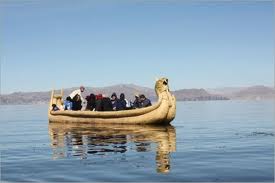
In the water they used boats, so they could get across the water bodies.
Tuesday, January 25, 2011
Music
There were 2 very common instruments, shakuhachi and koto. They would incorporate puppets and dramas.
There isn't a lot of information to be found about Ancient Japanese music. however, there is history of musicians, which proves their must have been music. As far as way back when, both poetry and music were very important. There is no specific destinction between the differences.

The above is a koto. A koto was a fairly large, stringed instrument. There are 13 strings, and you pluck the strings to make the music. The original koto only had 5 strings, was soon increased to 7, and has worked its way up to 13. IT was originally a Chinese instrument, and was introduced to Japan in the 7th century. The koto is made of Paulownia wood, well traditionally anyway. The bridges on it were ivory, they were often easily broken. The strings are typically silk or plastic. Silk sounds better, but isn't as stable.

The above is a Shakuhachi, it is a type of flute. Typically made from bamboo.The pitch is dependant on how covered the holes are. They blow into a piece called the "fipple", this blowing motion is like how you would blow into a beer bottle to make a cool noise. These fluts are rather pricy, maybe make one istead of buying one :P
In Ancient Japan, for awhile the playing of the shakuhachi was forbidden for years. When the goverment allowed it to be played again, it was more of an accompinayment. Eventually it was played solo again.The Shakuhachi was generally playe by men.
There isn't a lot of information to be found about Ancient Japanese music. however, there is history of musicians, which proves their must have been music. As far as way back when, both poetry and music were very important. There is no specific destinction between the differences.

The above is a koto. A koto was a fairly large, stringed instrument. There are 13 strings, and you pluck the strings to make the music. The original koto only had 5 strings, was soon increased to 7, and has worked its way up to 13. IT was originally a Chinese instrument, and was introduced to Japan in the 7th century. The koto is made of Paulownia wood, well traditionally anyway. The bridges on it were ivory, they were often easily broken. The strings are typically silk or plastic. Silk sounds better, but isn't as stable.

The above is a Shakuhachi, it is a type of flute. Typically made from bamboo.The pitch is dependant on how covered the holes are. They blow into a piece called the "fipple", this blowing motion is like how you would blow into a beer bottle to make a cool noise. These fluts are rather pricy, maybe make one istead of buying one :P
In Ancient Japan, for awhile the playing of the shakuhachi was forbidden for years. When the goverment allowed it to be played again, it was more of an accompinayment. Eventually it was played solo again.The Shakuhachi was generally playe by men.
Monday, January 24, 2011
The Children

Children were expected to respect. Mom's were often stay-at-home mom's and would take care of the children. A child would not be born where the husband was. The custom was that approximately a month before the baby was due to be born, the mother would return home to her parents for the birth of the baby. After the baby is born she will return home to her husband.
As soon as they were old enough, the chilren would start to help with the hunting and food gathering. All were expected to help in a village.
Families would work together, though the children had to do most of the work. opposed to getting beat for doing something wrong, the children would just get spanked and sent to bed early with no dinner.
Follow up
Hey, so i would like to encourage people once again to let me know what they want to learn about! I am posting things that I to am learning, but I would be happy to write about a topic, or go more into depth about a topic that readers are interested in!
Sunday, January 23, 2011
Religion
The main religion of Japan is Shintoism, it's been around since the prehistorical times. Another popular religion is Buddhism.

Shintoism rules:
i) Do not transgress the will of the gods.
ii) Do not forget your obligations to ancestors.
iii) Do not offend by violating the decrees of the State.
iv) Do not forget the profound goodness of the, gods, through which calamity and misfortunes are averted and sickness is healed.
v) Do not forget that the world is one great family.
vi) Do not forget the limitations of your own person.
vii) Do not become angry even though others become angry.
viii) Do not be sluggish in your work.
ix) Do not bring blame to the teaching.
x) Do not be carried away by foreign teachings.
Shintoism has many gods. The "main" god is the sun god-Anaterasu-omi Kami

The above is buddha, this is who the buddhists worship.
Buddhism is both a religion and a philosophy combining many traditions, beleifs, and practices. It is thought that budha was born 563 BCE. he was born in Lumbini, and raised in Kapilavastu. Both these towns are in what is now called Nepal. They believe in karma.Buddhism is a very very detailed religion.

Shintoism rules:
i) Do not transgress the will of the gods.
ii) Do not forget your obligations to ancestors.
iii) Do not offend by violating the decrees of the State.
iv) Do not forget the profound goodness of the, gods, through which calamity and misfortunes are averted and sickness is healed.
v) Do not forget that the world is one great family.
vi) Do not forget the limitations of your own person.
vii) Do not become angry even though others become angry.
viii) Do not be sluggish in your work.
ix) Do not bring blame to the teaching.
x) Do not be carried away by foreign teachings.
Shintoism has many gods. The "main" god is the sun god-Anaterasu-omi Kami

The above is buddha, this is who the buddhists worship.
Buddhism is both a religion and a philosophy combining many traditions, beleifs, and practices. It is thought that budha was born 563 BCE. he was born in Lumbini, and raised in Kapilavastu. Both these towns are in what is now called Nepal. They believe in karma.Buddhism is a very very detailed religion.
Art

Ancient Japanese art covered a variety of things. There was pottery, painting, sculpture, watercolour, and lots of other stuff. The 7th and 8th centries AD are when they first are discovering the japananese art. Until about 15 AD, religious and secular art were the most popular kinds of art.
Japanese writing was always done with a brush instead of a pen. because of the familiarity of the brush, it helped them with the painting. During the Edo period, a new type of art was introduced. During this period the religion started to decline. Scultpure was wrapped around religion, so the amount of sculptures also started to decline.
Tuesday, January 18, 2011
Martial Arts

There were three words originally to describe martial arts.
budō (meaning martial way)
bujutsu (no translation)
bugei (meaning martial art)
A common Japanese martial art, even to do this day, is karate. Karate means open handed. In karate you move up belt rankings. They are tournaments. These tournaments consist of forms (cuta) and sparring. In sparring you fight with the other person. Karate can be done without weapons, note the word open handed, but can also be done with weapons. Traditionally however, it is just done with your empty hands.
Another popular style was jujitsu. It is a 3000 year old martial art. Jujitsu is a blend of empty handed defence and offence aswell as bone setting and healing techniques.
A form of Jujitsu is Ninjitsu. Ninjitsu means the act of invisibility.
A ninja was someone who was a spy. They were taught the art Ninjitsu. Today, anyone who practices ninjitsu is considered a ninja. A ninja must consist of three things:
1)a hunter
2)a wizard
3)a warrior.
A ninja can be both male or female.
Home Sweet Home

To the right is a picture of a pit dwelling house. In ancient Japan was two popular types of houses. A pit dwelling house and a raised house.
A pit dwelling house is a house in the ground. It is started by digging a hole, and then columns are insterted inside of it. A roof is made out of poles and mud. It is then covered with a type of earthy covering. A typical enterance would be through the roof. A ladder would come from the opening and onto the floor. During the winter these homes were warm, and during the summer they were cool. The pit houses were rather comfortable, but were only lived in for around 10 years before they became unsafe, at this point they would have to be abandoned.
The main purposed of a raised house was to store food so that the food wouldn't be spoiled from the heat and humidity. Yes, they were raised off of the ground.
Subscribe to:
Posts (Atom)